
How to Grow a Date Palm: Learn how we do it in Israel
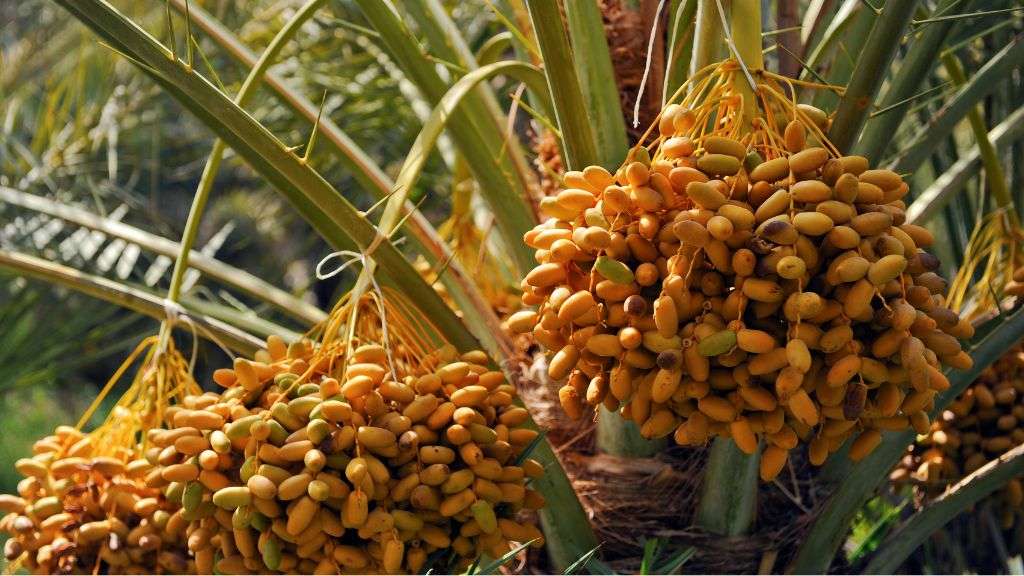
Date palm trees have been cultivated for over 5,000 years in arid regions worldwide. They are not only a symbol of life and prosperity but also a significant source of nutrition and medicinal value. In this article, we will deeply dive into how to grow a date palm tree, from planting to harvesting and everything in between.
The History of Date Palm Cultivation
The date palm tree is one of the oldest cultivated trees in the world. In the Bible, it is one of the Seven Species symbolizing Israel, while worldwide, it is considered a symbol of life and prosperity. The cultivation of date palms dates back to ancient times, with evidence of date cultivation in the Middle East, North Africa, and India.
The Benefits of Growing a Date Palm
Growing date palms has numerous benefits. They are a source of income for farmers, as well as a source of food and medicinal value for consumers. Date palms are also environmentally sustainable, as they can thrive in arid regions where other crops may not grow. Additionally, date palms can be intercropped with other crops, such as mango trees and pumpkins, providing farmers with additional sources of income.
Choosing the Right Variety
When it comes to growing date palms, choosing the right variety is crucial. In Israel, the Medjool date is the most popular variety, accounting for 85% of the country’s date production. However, there are many other varieties, such as the Bahri, Super Fresh Medjool, Deglet Nour, Ameri, Deri, Hadrawi, Halawi, Hayani, and Zahidi. Each variety has its unique taste, texture, and nutritional value.
Soil and Climate Requirements
Date palms require well-drained soil with a pH of 7.5 to 8.5. They also require full sun and a hot, dry climate, with temperatures ranging from 20°C to 50°C. In colder regions, date palms may require additional protection from frost and cold temperatures.
Planting a Date Palm
When planting a date palm, it is essential to select a healthy, disease-free seedling. The seedling should be planted in a hole that is twice as wide and deep as the root ball. The soil should be mixed with organic matter, such as compost or manure, to improve drainage and nutrient availability. After planting, the tree should be watered thoroughly and mulched to conserve moisture.
Fertilizing and Pruning
Date palms require regular fertilization to ensure healthy growth and optimal fruit production. The ideal fertilizer ratio is 8-3-24, which provides a balanced mix of nitrogen, phosphorus, and potassium. Pruning is also necessary to remove dead or diseased fronds, as well as to promote air circulation and sunlight penetration.
Irrigation and Pest Management
Date palms require regular irrigation to ensure healthy growth and optimal fruit production. The ideal irrigation system is a drip irrigation system, which provides water directly to the root zone while minimizing water loss and evaporation. Pest management is also crucial, as date palms are susceptible to pests such as the red palm weevil and the date palm scale.
Harvesting and Storage
Date palms typically begin to bear fruit after four to five years, with peak production occurring between seven and 20 years. Harvesting is typically done by hand, with the fruit being picked when it is fully ripe. Dates can be stored for up to six months at room temperature, or up to a year if refrigerated.
The Future of Date Palm Cultivation
As the world’s population continues to grow, the demand for food and agriculture will increase. Date palms are an excellent crop for arid regions, providing a sustainable source of income and nutrition. With advancements in technology and agriculture, the future of date palm cultivation looks promising.
Conclusion
Growing a date palm tree requires patience, dedication, and hard work. However, the rewards are well worth it, with a sustainable source of income and nutrition. By following the guidelines outlined in this article, you can successfully grow a date palm tree and contribute to the world’s agricultural landscape.